The military origin of physician associates
The physician associate (or physician assistant, PA) profession was born from military service. In 1965, Dr. Eugene Stead Jr. at Duke University recognized that Navy corpsmen and Army medics returning from Vietnam possessed extensive medical skills but lacked feasible opportunities to practice in civilian healthcare. These veterans had developed exceptional battlefield medical expertise, yet much of their training failed to translate into civilian healthcare professions. Dr. Stead created the first PA program specifically to utilize this untapped resource, basing his educational model on the fast-track physician training used during World War II.
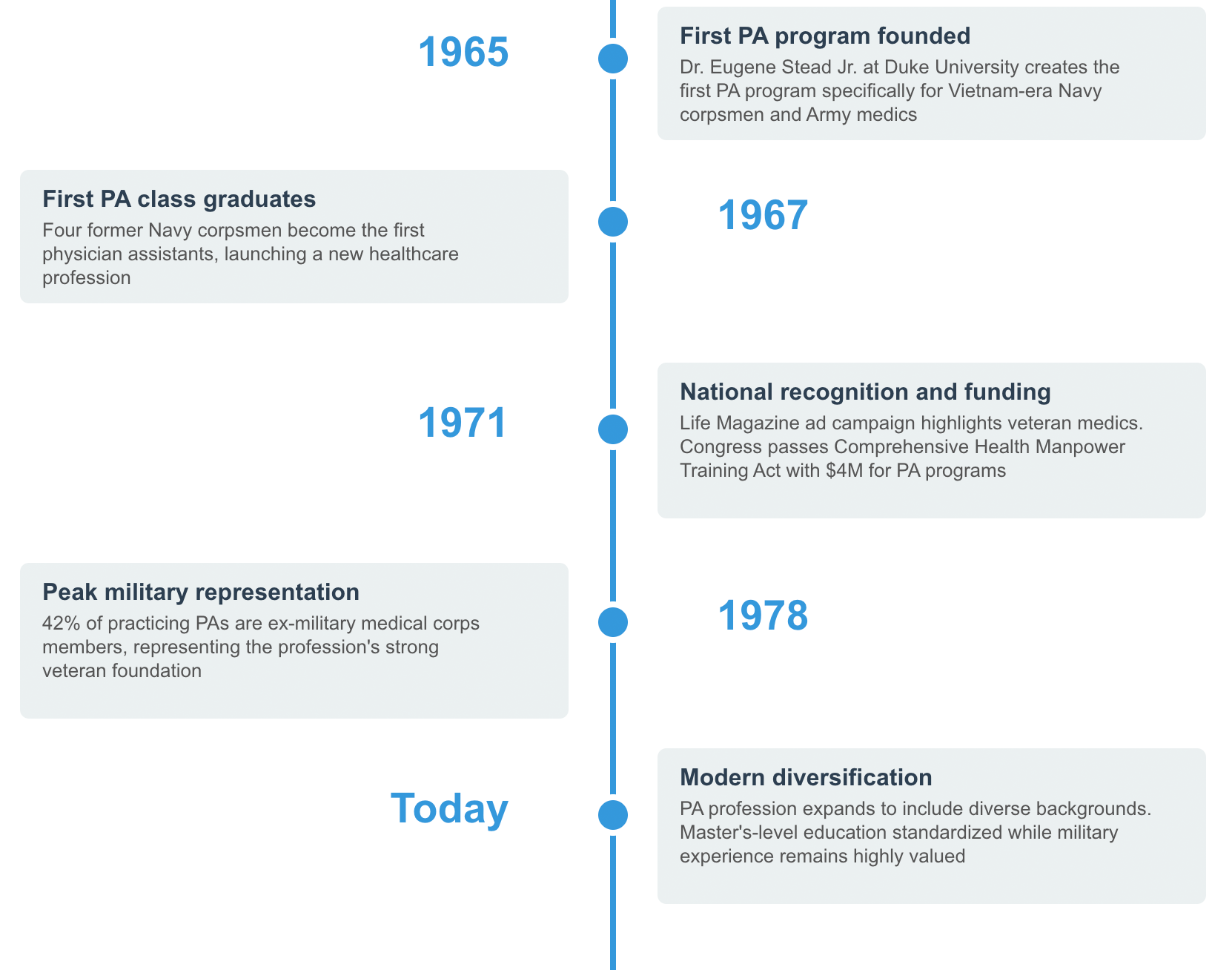
Advocacy efforts helped achieve formal recognition of the connection between military medicine and civilian healthcare. In 1971, the American Medical Association ran an advertisement in Life Magazine featuring a Vietnam veteran, highlighting how trained military medics belonged in hospitals and doctor's offices. This campaign helped secure federal funding through the Comprehensive Health Manpower Training Act of 1971, establishing PA programs nationwide.
"Physician associates are indispensable to the military, delivering essential medical expertise, enhancing mission readiness, and safeguarding the health and well-being of our service members, even in the most challenging environments."
- Dr. Pamela Ograbisz, DNP, FNP-BC, vice president of clinical operations at LocumTenens.com and LT Telehealth
The face of modern PAs
Over the decades, the PA profession continued to evolve and develop. By 1978, 42% of practicing PAs were ex-military medical corps members, but the pipeline has since broadened to encompass individuals from various healthcare backgrounds. The modern PA education is standardized with master's-level programs requiring clinical prerequisites, though military medical experience remains highly valued by admissions committees.
"With strong family ties to the military and a daughter currently at the United States Naval Academy, I deeply appreciate the sacrifices and dedication of our veterans. Their service protects our freedoms and strengthens our nation, and I am profoundly grateful for their courage and resilience."
- Dr. Pamela Ograbisz, DNP, FNP-BC, vice president of clinical operations at LocumTenens.com and LT Telehealth
Locum tenens work for veterans

For veterans, this autonomy and flexibility of locums work is often appreciated after years of highly structured military service. This contract-based work style allows healthcare professionals to choose when and where they work, with assignments ranging from short-term coverage to longer placements. Veterans particularly excel in locum tenens assignments because they bring discipline, adaptability and crisis management skills honed in military service.
Working with veteran populations through the VA health system offers additional meaning. According to a systematic review on locum tenens, key factors attracting providers to temporary positions include:
- Flexible contracts
- Autonomy and the ability to serve specific patient populations
- Meaningful work that connects military service to continued service in healthcare serving those who served
If you are a veteran seeking the healthcare role that best suits your financial goals and work-life balance requirements, consider the flexibility of locum tenens assignments as you move into the next stage of your career.